The Flow Engineering Game
Introduce a group to rapid Value Stream Mapping in 30 mins or less.

Steve Pereira
What Is The Flow Engineering Game?
Flow Engineering can be introduced as a game by using a prototypical or fictional example stream and randomly generated data.
The game serves as a fun, quick, and effective introduction to value stream mapping and flow improvement. Since the stream doesn’t directly reflect an actual stream, it can be used to not only introduce concepts but simply and clearly show how to map and analyze in a positive context before we get into the higher stakes and more detail of real life. It gives participants a chance to practice something closer to a consultant or facilitator view of a value stream without the emotional or logical connection to a real stream. The gamified workshop serves as a warm-up for real mapping, so participants can learn the basics before applying the technique to their own context. This also works to demonstrate mapping to participants from varied contexts, where they don’t share a common stream. There are two key aspects to the game that differentiate it from a typical mapping workshop:
-
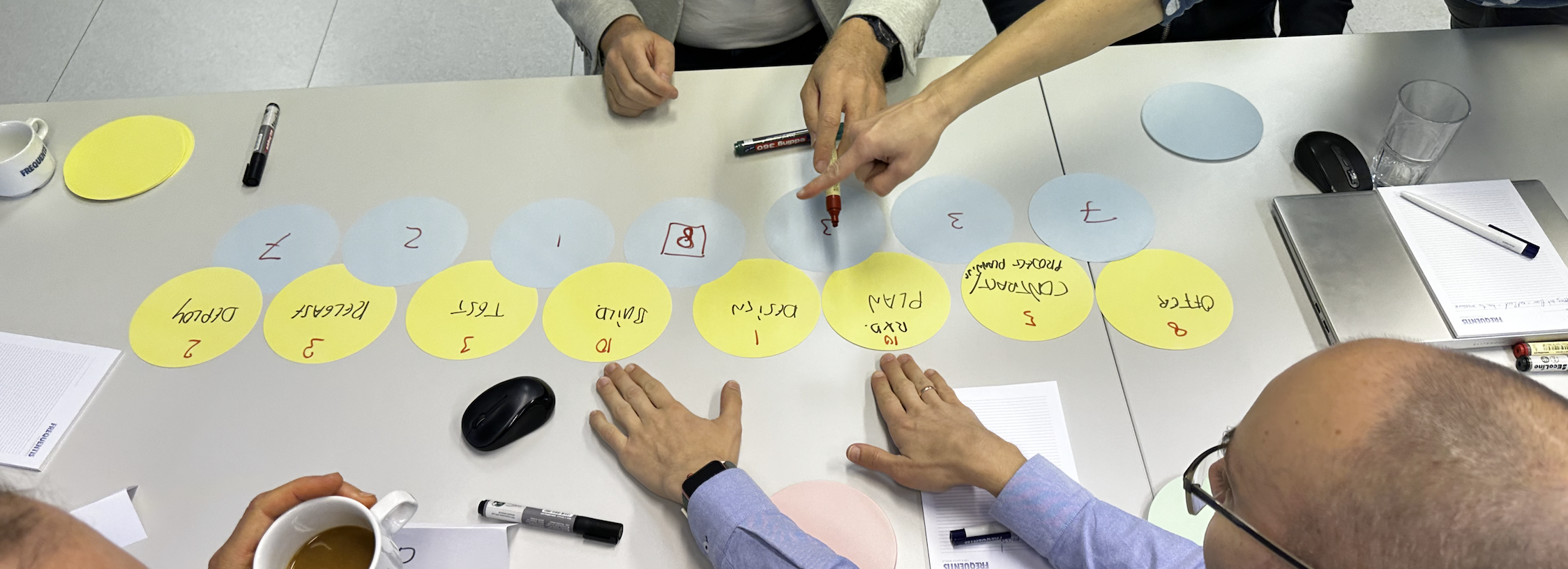
Predefined Stream: Lay out a proto-typical example stream as a starting point for mapping. Add stages as needed, but the starting scaffold can help participants understand the scope and zoom-level you’re targeting
-
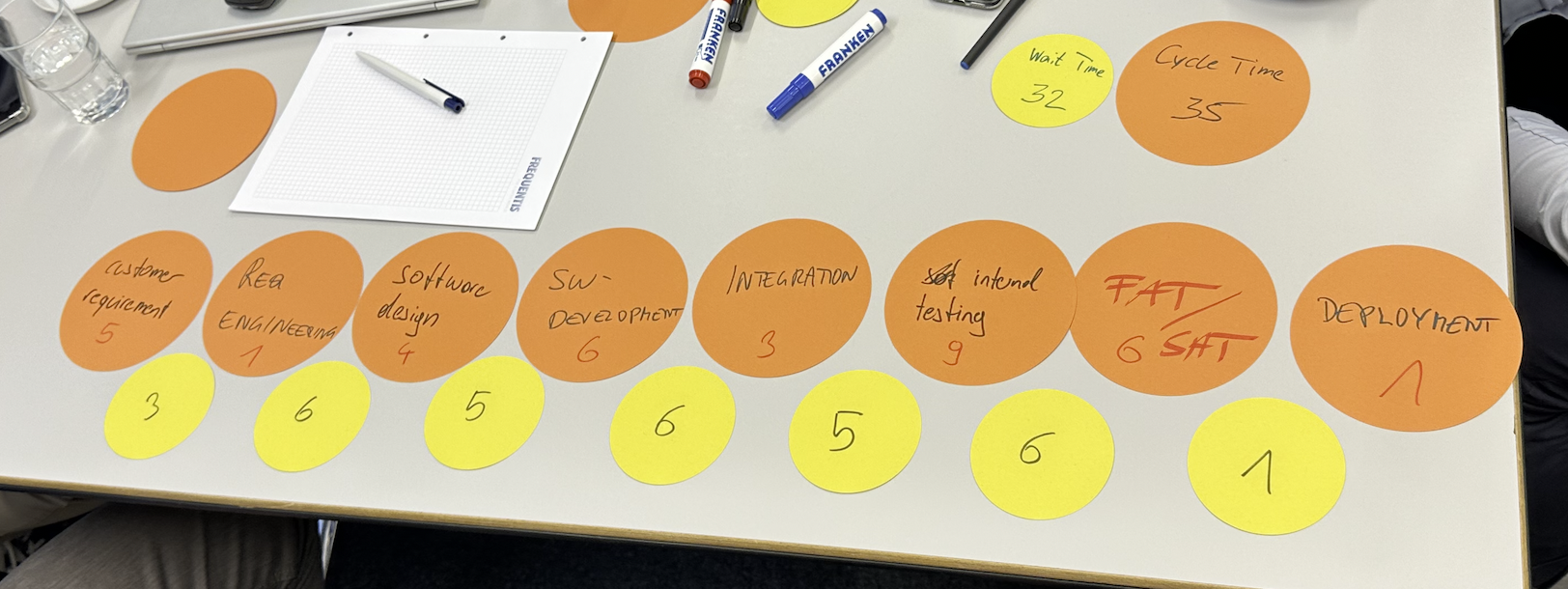
Random Timing: Use dice or a random number generator to assign measurement for stages and wait time. Pick a unit of measurement for each as desired (hours, days, weeks, months)
- This works to demonstrate how perfect detail is less important than generating dialogue.
- The base unit can fit the current flow of the organization in question. We could use mostly months and weeks to illustrate a case in medical technology, or weeks and days to illustrate a fully digital product release
- Vary from the base unit to see what appears when you have multiple stages following the base scale (e.g. days) but a few that dramatically vary (e.g. months or hours)
As a result, in as little as 30 minutes, you can introduce the concepts of value stream flow, visualization, measurements, constraints, and improvements. It’s also a fun way to collaboratively learn lean skills by doing, engage a new or existing team, and start a larger conversation about flow.
Why Do The Flow Engineering Game?
The game is a quick, effective introduction to rapid Value Stream Mapping. By using a fictional stream, it removes the emotional or logical baggage of real work, allowing participants to practice analysis in a low-stakes, positive context before diving into a real Flow Engineering program.
We Aim for 3 Key Takeaways
- Create end-to-end visibility of the flow of work
- Measure performance
- Find & address issue hotspots
Skills You’ll Learn
✔️ How to simply & quickly visualize a value stream
✔️ How to calculate key flow metrics
✔️ How to compile & organize stages of a value stream
✔️ Rapidly identify hotspots
✔️ How to roughly measure activity & wait times
✔️ Plan next steps to boost flow
How to do The Flow Engineering Game?
Flow of the Game
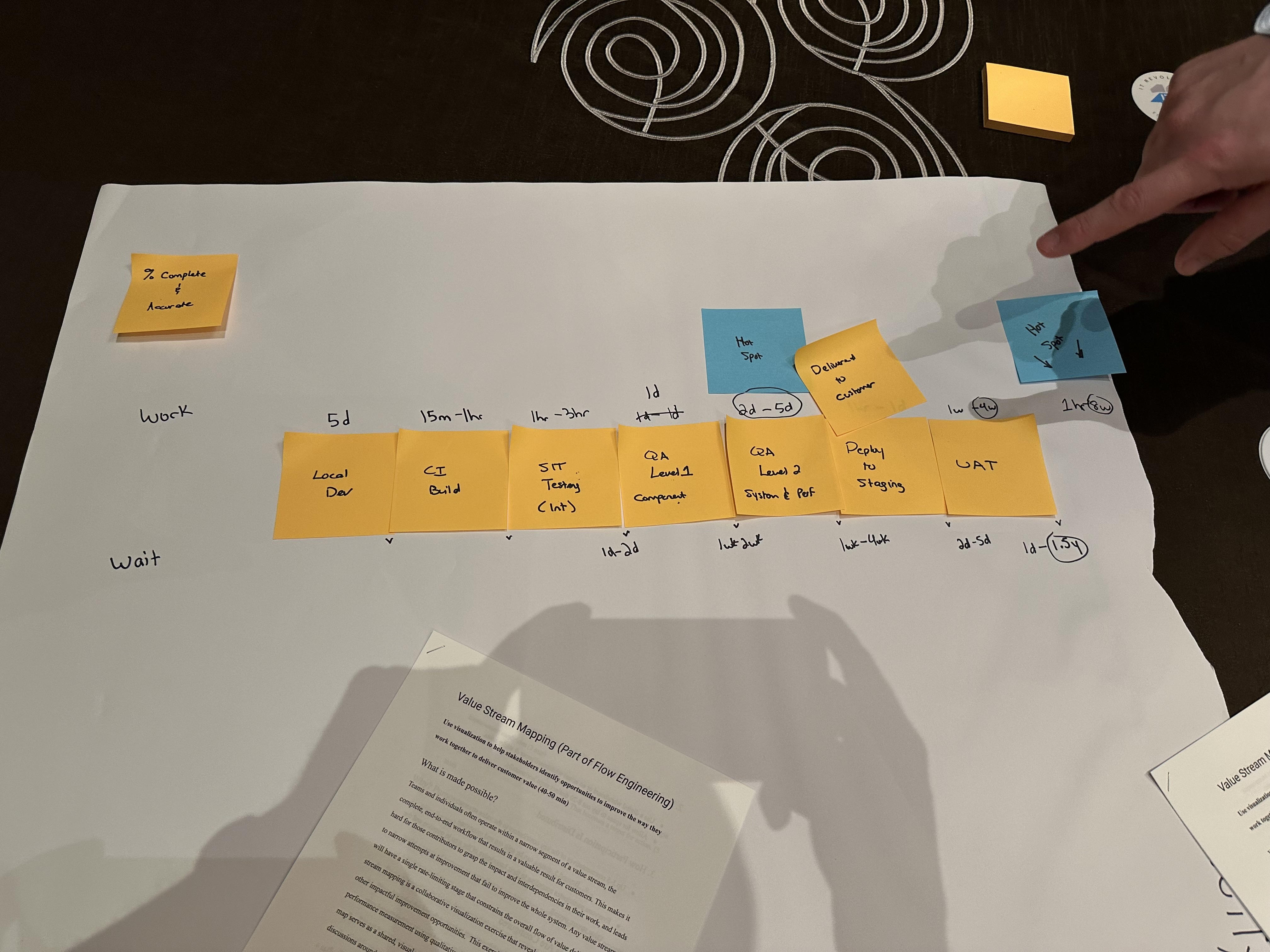
- Step 1: Lay out an example stream as a starting point for mapping. Add stages as needed, but a simple scaffold like this is a great starting point.
- Step 2: Use your AI of choice to generate random measurement data for stages and wait time. Pick a unit of measurement that fits your context (hours, days, weeks, months). Add up the total step and wait time to get lead time, and % of time waiting.
- Step 3: Review the data, and identify a hotspot to focus your improvement efforts. When it comes to hotspots, wait time is a primary focus, but any outlier may be a candidate.
- Step 4: Identify 3 potential causes of the hotspot you revealed, considering both upstream (activities earlier) or external (other groups) influences
- Step 5: Identify 3-5 action items to address the causal factors and place them next to or overlapping each other.
- Step 6: Forecast the improvement to the total lead time and reflect on the improvement with your team. Do all your improvements require major engineering changes, or are they mostly process?
Beyond the Basics
- Use your map and hotspot to identify AI enhancements that improve throughput
- Shift focus to quality or clarity, by adding quality data like error rate or rework
- Map customer onboarding, sales process, incident response, marketing, or any other flow
- Dig deeper into your hotspot with a 5 Why analysis
- Redesign the value stream as a future state flow. What if you run some activities in parallel?
Look at The Flow Engineering Game